One parameter.
Not a rebuild
from scratch.
Custom stainless steel casework varies on nearly every order. Widths, heights, door counts, frame layouts, none of it repeats exactly. We built a single parametric template that turns that variation into a set of numbers instead of a redesign.
Knowledge that
lived in someone's
head, not the model.
Each new job meant a designer rebuilding geometry from scratch, or hand-editing a prior job's model and hoping nothing downstream broke. That worked at low volume. It didn't scale.
Every manual rebuild carried the risk of a missed dimension, a door that didn't line up with its frame opening, or a toe kick gap that only showed up once the unit hit the shop floor. The knowledge of how to build these assemblies correctly lived in a handful of people's heads, not in the model itself.
One skeleton driving
every downstream part.
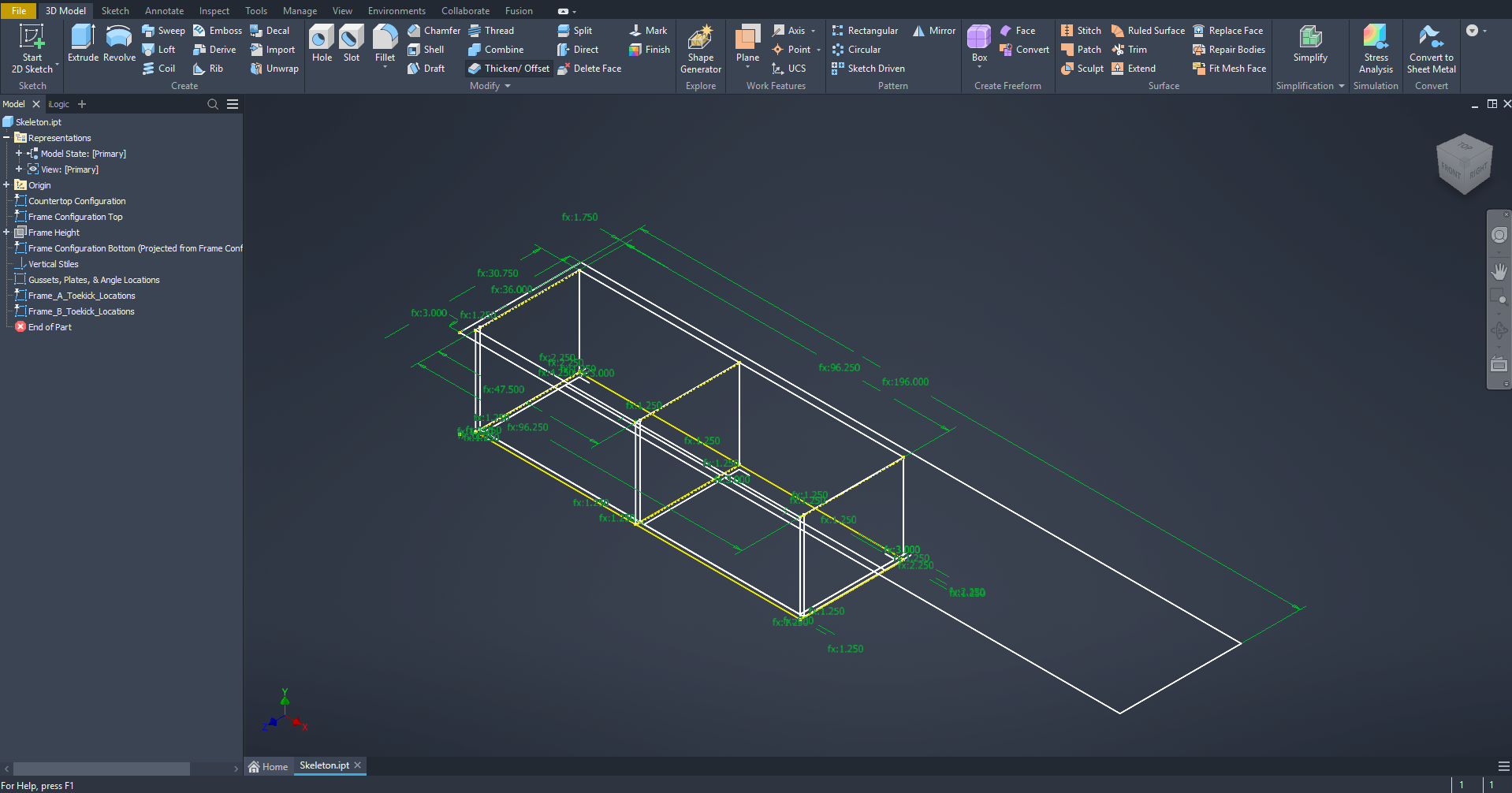
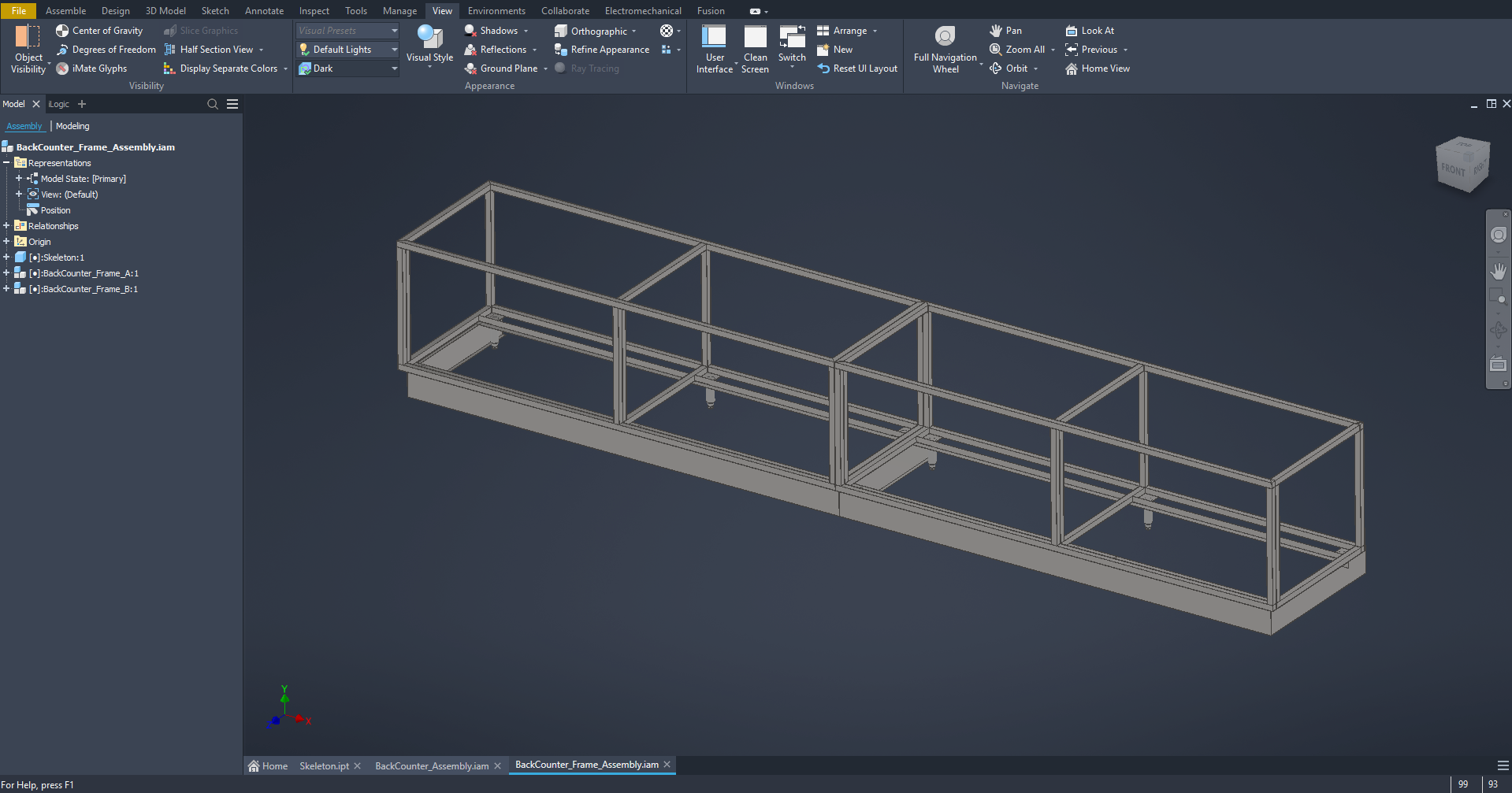
A single driving skeleton carries the true parametric intent for the entire assembly. Change a width or a door count once, and everything downstream updates in lockstep.
Not every dimension
should be touched the same way.
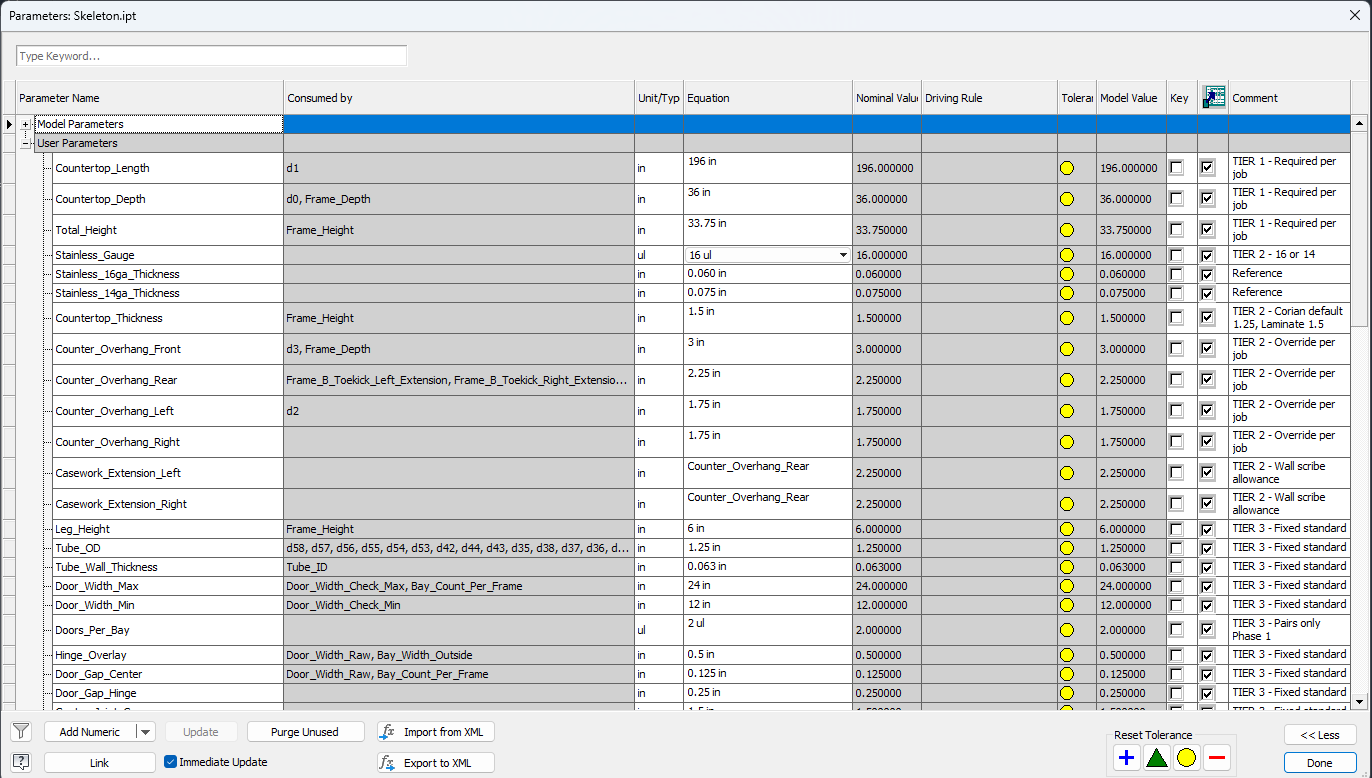
Every parameter in the skeleton is classified into one of three tiers, right in the parameter table where a designer will actually see it.
Not in Autodesk's
documentation.
These came from building the template, breaking it, and rebuilding it until it held up under real order variation. They're now baked permanently into how the template works.
A parameter change,
not a redesign.
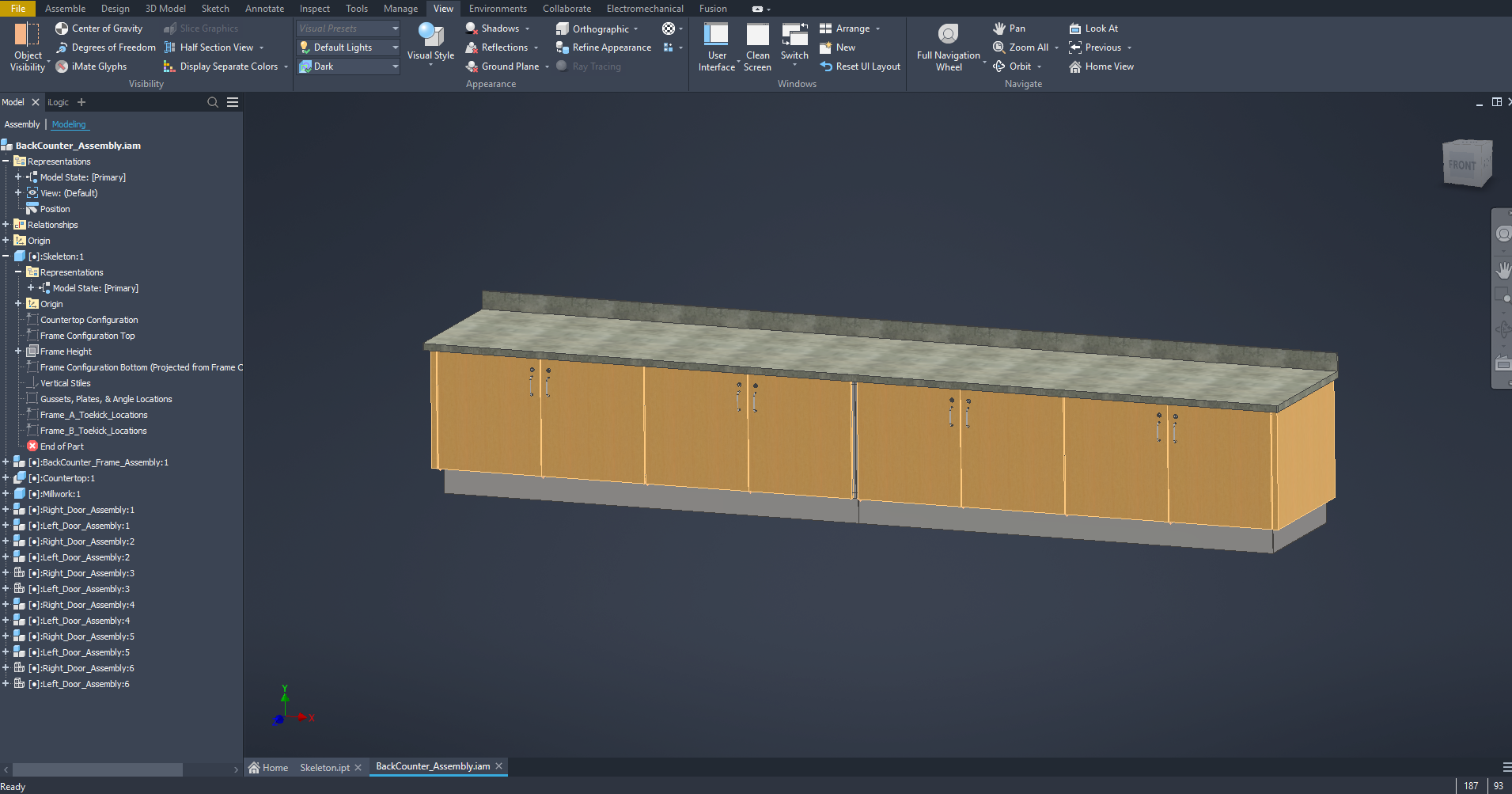
A designer sets the envelope dimensions, door configuration, and frame layout, and the skeleton propagates those decisions through every downstream component automatically. What used to be a rebuild is now a set of inputs.
The risk that used to live in someone's memory now lives in the model's logic, where it can't be forgotten on a Friday afternoon. It's the same principle behind the CAM stabilization work we'd already done for this same manufacturer: find where tribal knowledge is doing the job a system should be doing, and build the system.
Find where tribal knowledge is doing the job a system should be doing, and build the system.
Have something
worth building?
We find the friction. We design the system. We build it, test it, and hand it off running. Every time.